Congested and Contested Space
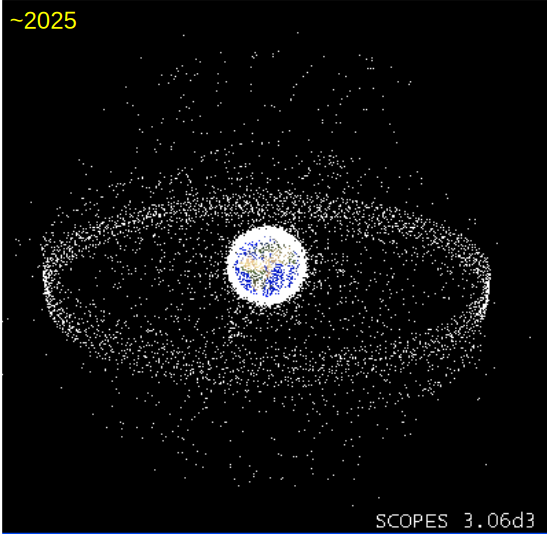
The orbital environment is increasingly congested. The Space-Track catalog currently tracks over 47,700 space objects, including 12,100 active payloads, 21,800 pieces of orbital debris, and 16,700 analyst objects. RADAR systems are best suited for characterizing objects in Low Earth Orbit (LEO), while optical systems are preferred for Geosynchronous Orbit (GEO) and beyond.
Non-Resolvable Satellite Characterization
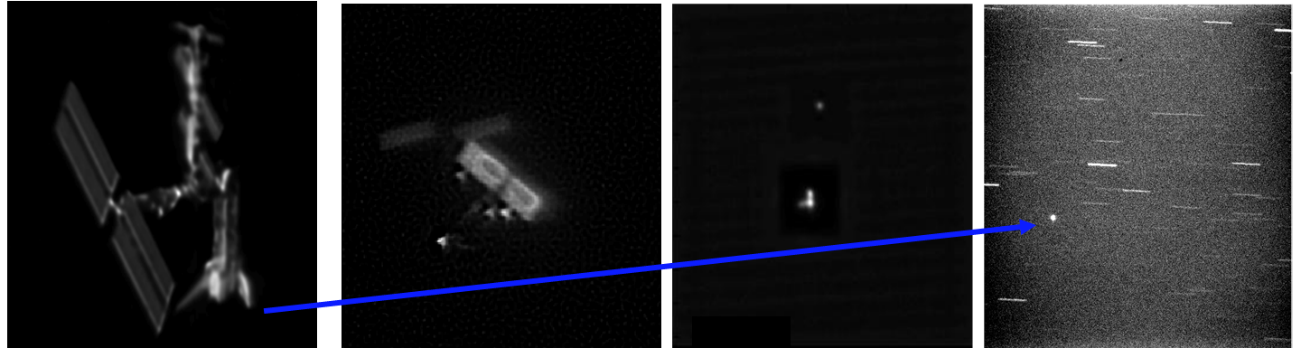
Because most satellites are either too small or too far away, ground-based telescopes are typically unable to obtain high-resolution imagery of them. Instead, satellites appear as point sources — a non-resolved signature. Despite this limitation, the non-resolved signature of a satellite still contains information of importance to Space Domain Awareness (SDA). Strong EO Imaging conducts observations of unresolved satellites simultaneously using multiple filters and telescopes, applying remote sensing techniques that exploit the three fundamental properties of an electromagnetic wave:
- Amplitude — Photometry: light curves, attitude determination, brightness
- Wavelength (Color) — Spectroscopy: surface material identification
- Electric field orientation — Polarimetry: surface materials and scattering properties
Low-Resolution Spectra of GEOs
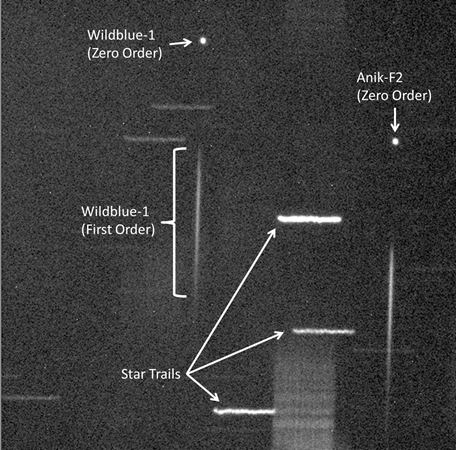
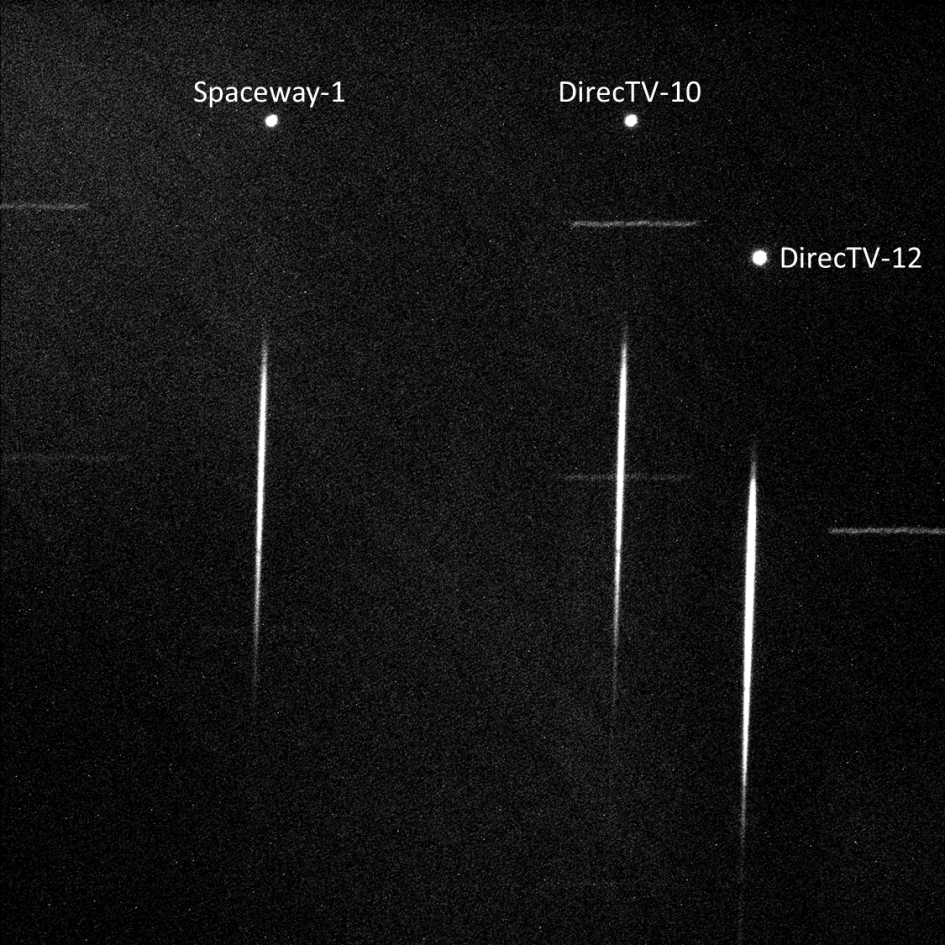
Slitless spectroscopy enables simultaneous multi-object spectral imaging of GEO satellites. The images below show examples of this technique: the left panel captures Wildblue-1 and Anik-F2, with both zero-order and first-order spectral trails clearly visible alongside star trails. The right panel shows three GEO satellites — Spaceway-1, DirecTV-10, and DirecTV-12 — with their corresponding spectral signatures.
Solar Panel Spectra
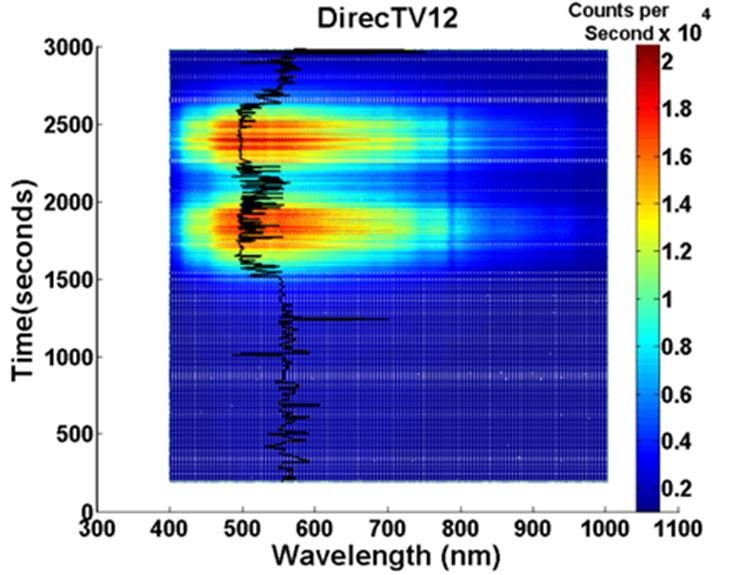
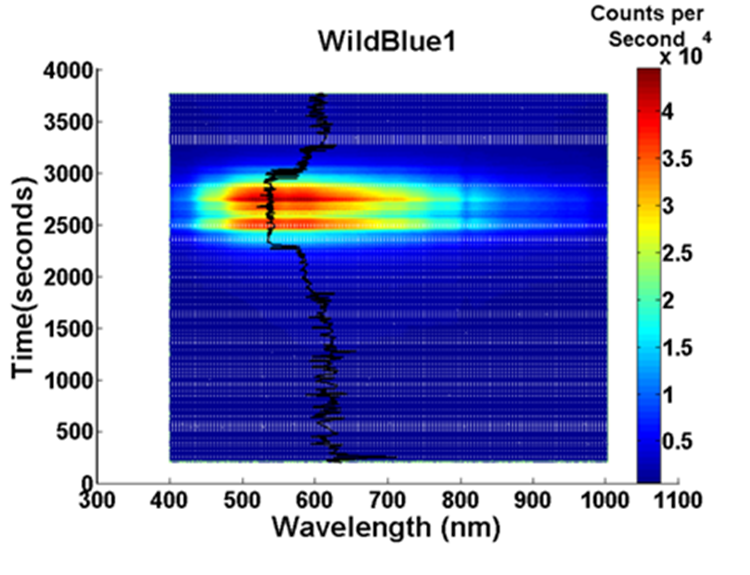
Solar panels are a dominant feature of most GEO satellites and produce distinctive spectral signatures during glint events — periods when sunlight reflects directly off the panel surface toward the observer. Analyzing these glints provides insight into the satellite’s orientation, rotation rate, and panel geometry.
Linear Polarization Signatures of GEOs
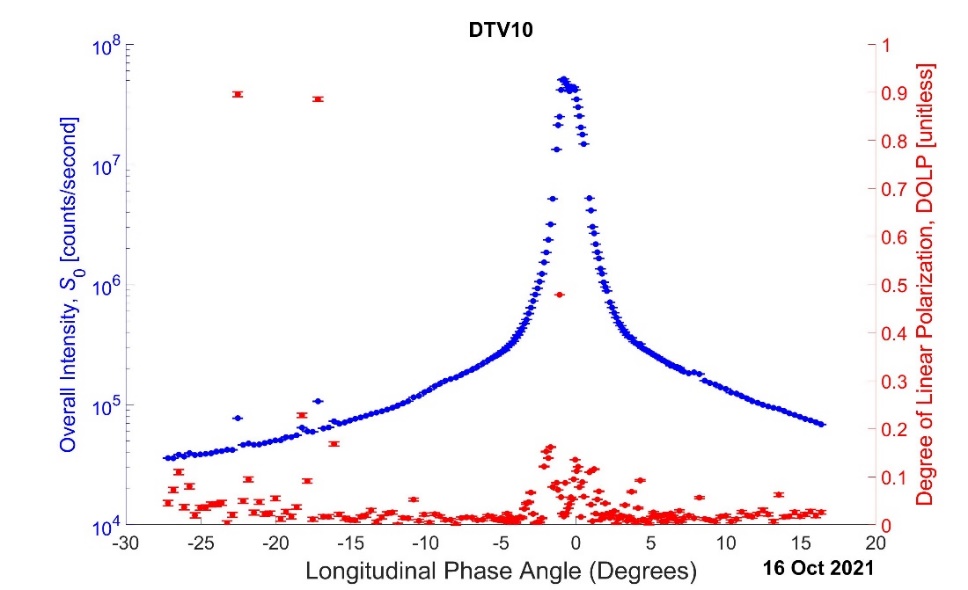
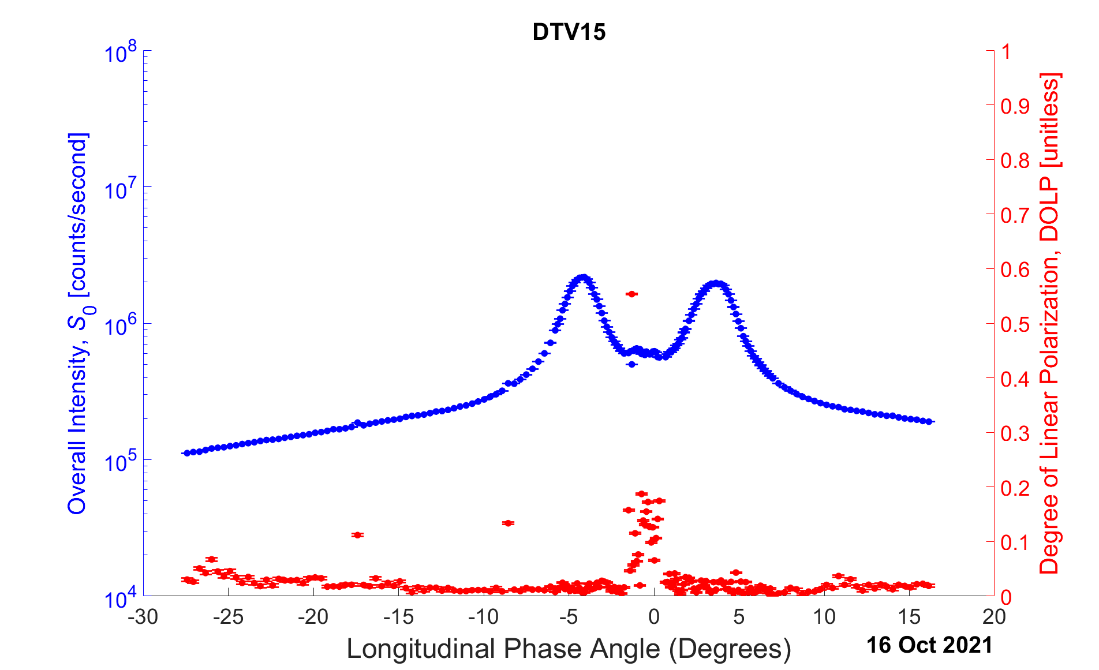
Micro-glints observed in satellite spectra during and between solar panel glint events motivated investigation of the polarization signatures of GEO satellites. Polarization — the orientation of the electric field — provides information about the scattering properties of different surface materials.
The plots below show polarization data for DirecTV-10 (left) and DirecTV-15 (right). The x-axis is longitudinal phase angle; the left y-axis shows intensity (S0, blue); the right y-axis shows Degree of Linear Polarization (DOLP, red). DirecTV-10 exhibits micro-glints and polarization glints on top of the main glint — whereas DirecTV-15 shows micro-glints and polarization variation in the saddle between two main glints rather than on top of them. This demonstrates that the source of the micro-glints is the spacecraft bus and payload, not the solar panels: solar panels are spectrally uniform with a smooth DOLP transition across the surface normal, while the spacecraft bus and payload configuration are inherently non-uniform.